Three oscillators, two engines
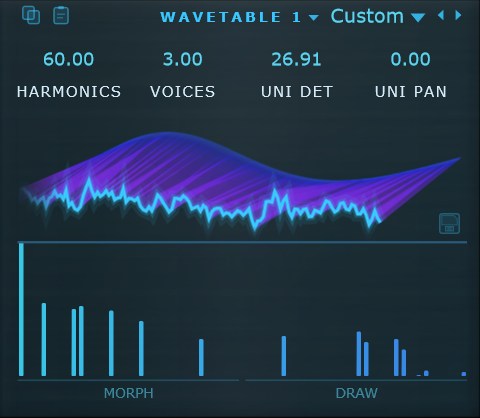
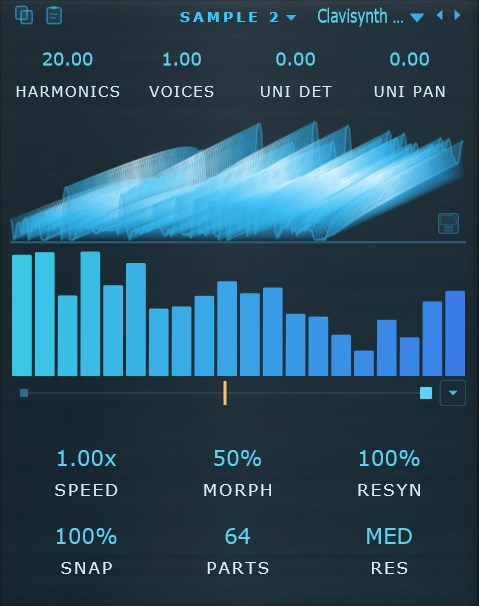
Each oscillator is either a wavetable drawn harmonic by harmonic, or a sample taken apart into its partials and rebuilt, so a recording gets the same per-harmonic controls a wavetable has.
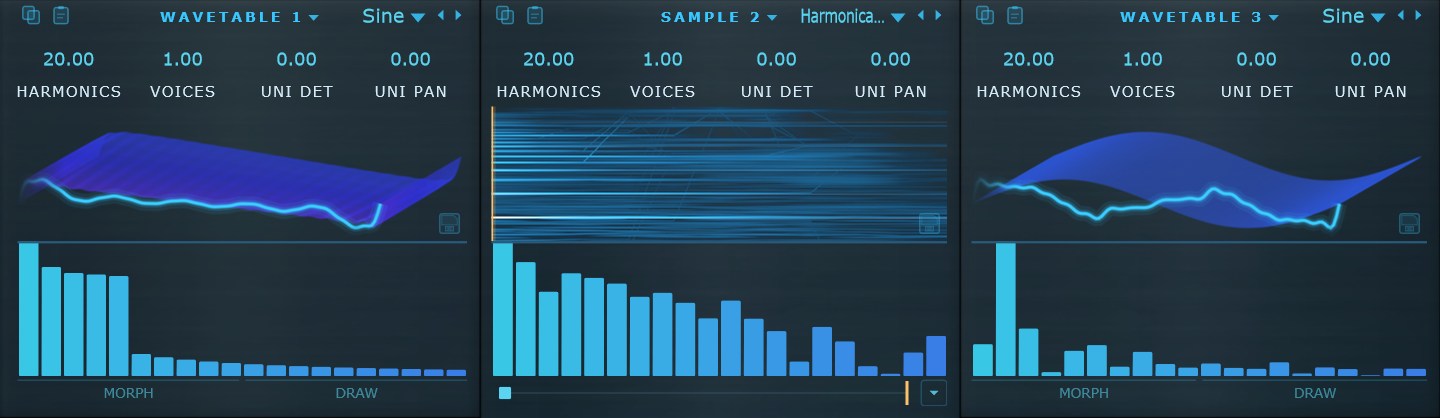


Frontier transforms complex waveforms into evolving, immersive soundscapes by giving you control over how individual harmonics emerge, move, and interact over time.
Bring harmonics in one by one, from subtle, shifting textures to rich, complex timbres. Shape each with its own envelope, or simply delay them, then sync the delays to your DAW to make the build rhythmic.
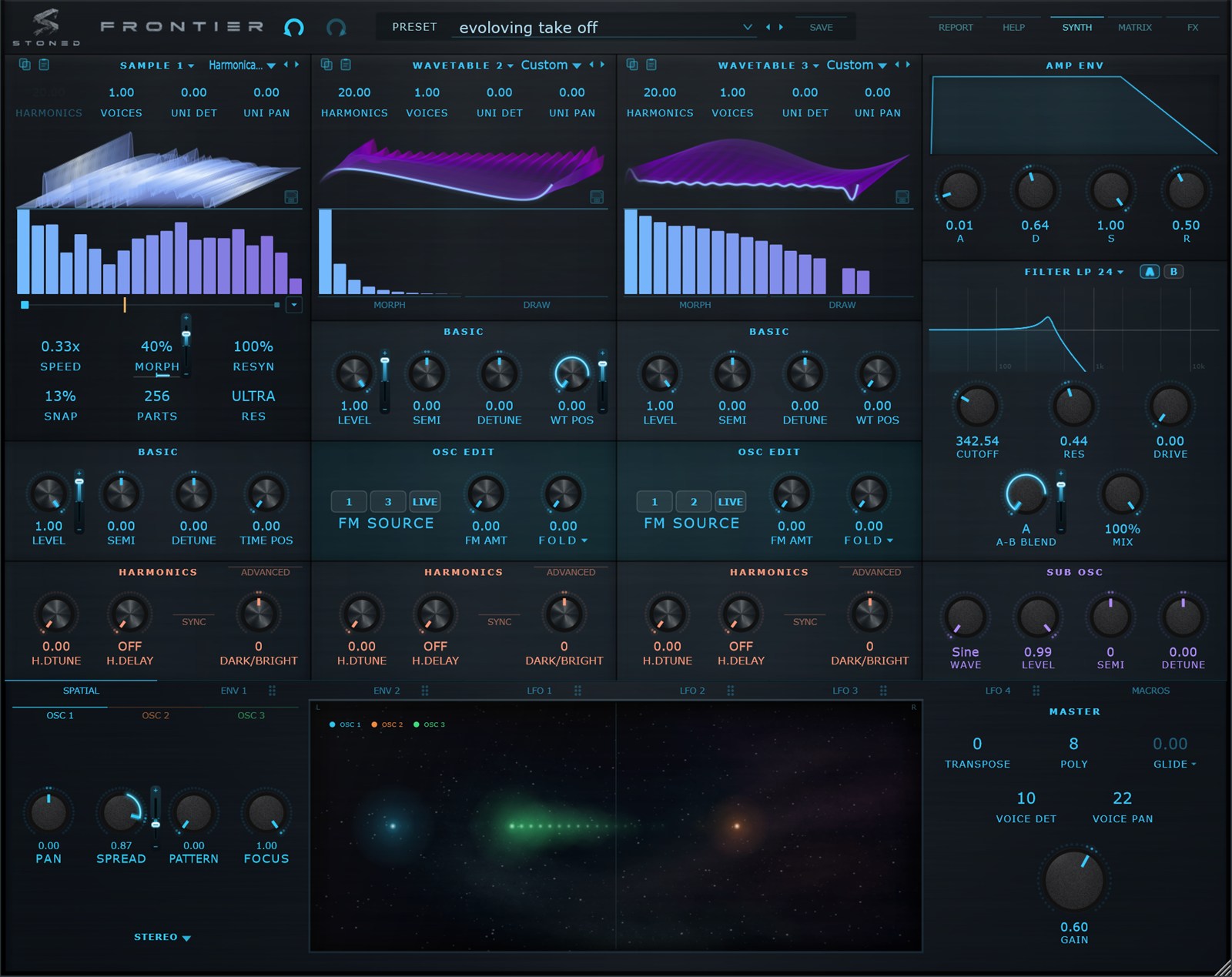
Take control of individual harmonics and push your sound beyond conventional synthesis.
Each harmonic can be independently detuned, delayed, and modulated, allowing you to introduce subtle movement, inharmonic textures, evolving tones, and completely unconventional sounds. Whether you’re creating delicate ambient layers or dense, complex timbres, Frontier gives you precise control over the building blocks of your sound.
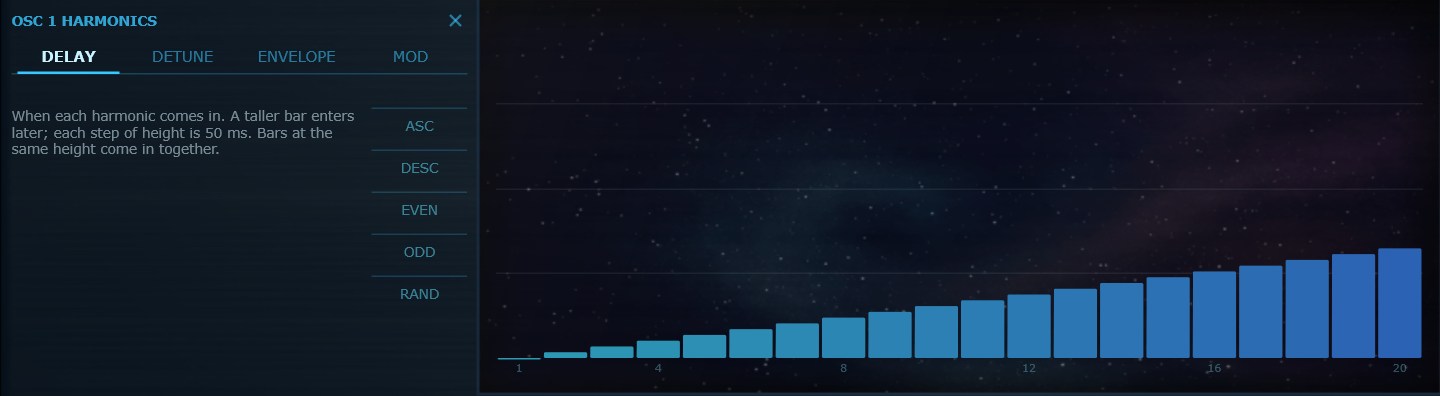
Each oscillator is either a wavetable drawn harmonic by harmonic, or a sample taken apart into its partials and rebuilt, so a recording gets the same per-harmonic controls a wavetable has.
Switch any wavetable's graph to DRAW and sketch a waveform onto it, or drag the harmonic bars to build it one partial at a time. Press MORPH and the frames you have drawn become one continuous wavetable, each kept exactly as you made it, with smooth blends in between. Save it with one click and it appears under User in the wavetable menu, ready for any patch.
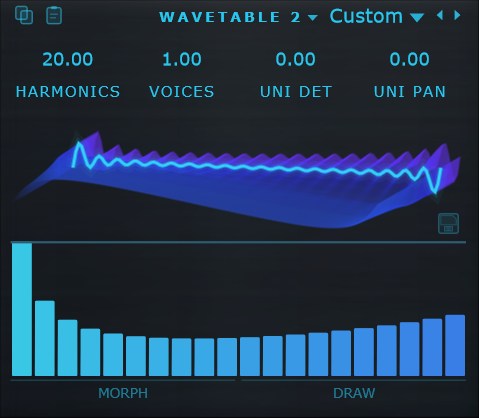
Set how many harmonics an oscillator plays, from a single sine to sixty, and modulate the count. Fewer is darker and lighter on the processor; the graphs show exactly what is left.
Any oscillator can modulate another, either as a spectrum that evolves with the modulator or live at audio rate.
Six envelopes, four LFOs and four macros, plus velocity, key tracking, mod wheel and aftertouch. Drag a source onto a control, or use the matrix.
Reverb with impulse responses, delay, chorus, phaser, saturation and more, in any order, and every setting a modulation destination.
Load up to eight samples into one oscillator and Morph moves between them. It is not a crossfade. Frontier matches the partials of each recording to its neighbours, so between two samples you hear a single new sound: shared partials glide from one to the other, and the rest fade in and out around them.
Every point along the way is playable, and the order of the files is the shape of the journey. Sweep Morph with an envelope, an LFO or a macro, and scrub through time while you do it, to travel through sounds that exist in none of the recordings on their own.
Frontier takes harmonic synthesis into the spatial domain.
Position individual harmonics anywhere across the stereo field, creating movement and depth within the sound itself. With binaural and ambisonic routing, you can take this further, placing harmonics in front of, behind, or around the listener to create truly immersive sonic environments.
Frontier's spatial map shows every harmonic of every oscillator as a point you can drag. Spread an oscillator's harmonics by pattern, focus them, or move them one at a time. Then choose what the map is a map of.
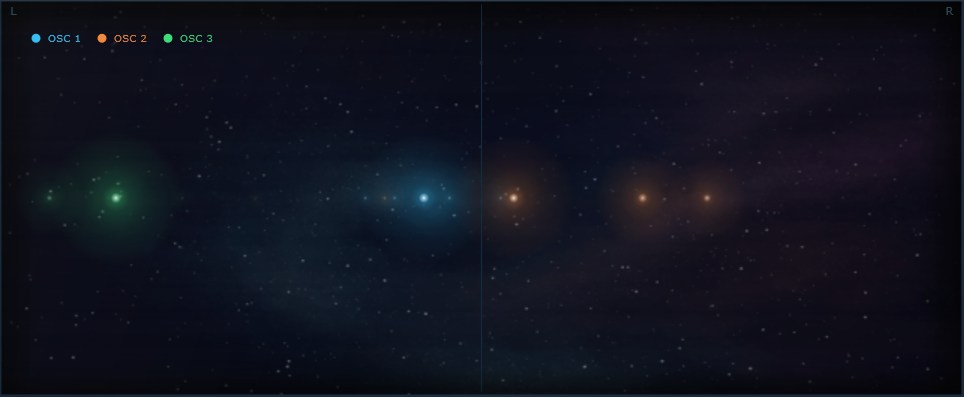
Harmonics panned individually across left and right.
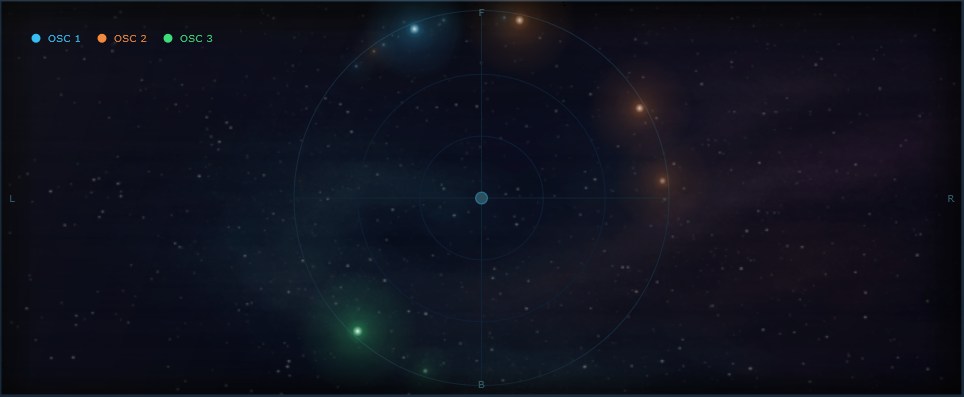
Harmonics placed around the listener for headphones, in front, behind and to the sides.
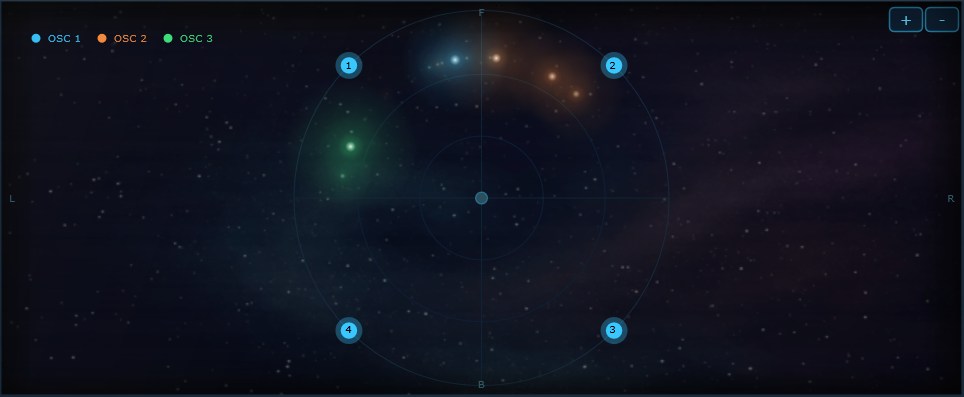
Up to sixteen speakers laid out on the map itself, each on its own output for multichannel rooms and installations.
Frontier brings harmonic evolution, independent detuning, envelope shaping, DAW-synchronised timing, and advanced spatial control together in one instrument.
The result is a synthesiser designed not simply to generate sound, but to evolve it.
Frontier is in closed beta on Windows. Testers get the full instrument and a licence for the finished release. In return we ask for bug reports and honest opinions.
Tell us which host you use and what you make with it.